

A white background with a few lines on it

What Is a Mobile Funeral Service? A Better Way

October 5, 2026

Was mobile funeral care really the original model?

Yes. The modern funeral home feels traditional, but it is actually a relatively recent development. For much of American history, funeral care happened where families lived. When someone died, an undertaker traveled to the home, helped prepare the person who died, and supported relatives through the ceremony.

The body was often placed in the parlor, which is why that room became associated with funerals. Families, neighbors, and friends gathered there to pay respects. Care was close, familiar, and connected to the household—not separated from everyday life.

That history matters because mobile funeral care is not simply a new experiment. In many ways, it is a return to a deeply established approach: bringing professional support to the family rather than asking the family to enter an unfamiliar institution.

Why did funeral homes become the standard?

Several major changes gradually moved funeral care away from the home and into dedicated facilities.

The Civil War and embalming

The Civil War changed American attitudes toward embalming. Soldiers often died far from home, and families wanted their loved ones returned for burial. Embalming made longer-distance transportation and delayed funerals more practical.

Abraham Lincoln’s funeral train, which carried his embalmed body through several states in 1865, also made the practice more visible to the public. Over time, embalming became increasingly connected with professional funeral service.

Smaller homes and hospital deaths

Between roughly 1910 and 1930, homes became smaller and less suited to large gatherings or in-home preparation. More people also died in hospitals, where medical care was becoming more common. Death gradually moved out of the home and into institutional settings.

Licensing and motor hearses

Funeral service licensing created professional standards, while motor hearses made transportation easier. Dedicated funeral homes could provide preparation rooms, chapels, offices, and space for visitation—all under one roof.

The result was convenient and organized, but it also changed the emotional experience. The parlor became the living room, and funeral care became something many families experienced somewhere else.

What makes a mobile funeral service different today?

A mobile funeral service brings the planning process back into a setting where families may feel more comfortable. Instead of making several trips during an emotional time, relatives can receive guidance at home or another appropriate location.

Into Our Kare provides mobile funeral care throughout Gaston, Lincoln, and Cleveland Counties, including Cherryville, Lincolnton, Gastonia, Kings Mountain, Shelby, Dallas, Waco, Crouse, and Bessemer City.

The goal is not to recreate every historical practice. It is to combine the personal nature of home-based care with current professional standards, clear communication, and legally appropriate arrangements.

What can families arrange through mobile care?

Depending on their wishes and circumstances, families may discuss:

  • Simple cremation or direct cremation
  • Cremation with a private viewing
  • Cremation memorial services
  • Green burial and environmentally thoughtful options
  • Traditional funeral services

A mobile provider can explain the differences, review pricing, answer questions, and help a family make decisions without pressure.

A family discussing funeral planning documents at home

Is mobile funeral care only for cremation?

No. Although many families choose mobile services because they want a simpler cremation experience, mobile care can support several types of arrangements. The appropriate options depend on the family’s wishes, the person’s plans, timing, and applicable requirements.

Families may want a private goodbye before cremation, a memorial service later, a green burial, or a more traditional ceremony. The benefit of a mobile approach is that the conversation starts with the family’s needs instead of a fixed facility package.

You can explore available options through Cremation Services , Green Burial , and At Home & Destination Services .

Why might families choose care at home?

Home-based planning can be especially helpful when relatives are grieving, coordinating schedules, caring for children, or assisting an older family member. A familiar environment may make it easier to slow down and ask questions.

Families often choose mobile funeral care because it can offer:

  • Greater comfort and privacy
  • Fewer trips to a funeral facility
  • Flexible conversations at a convenient location
  • Clear explanations of services and costs
  • A more personal planning experience

It can also help relatives participate when they cannot easily travel. Mobile care does not remove the need for professional guidance; it changes where that guidance is delivered.

A calmer way to make decisions

Funeral planning rarely feels simple, especially immediately after a death. A family may be asked to make choices about transportation, disposition, ceremonies, timing, and payment while also managing grief.

Meeting in a familiar place can make the process feel less rushed. Families can involve the people who need to be present, take notes, revisit questions, and choose only the services that fit their values and budget.

For families planning ahead, mobile conversations can also make it easier to discuss wishes before a crisis. Plan Online offers another way to begin gathering information, while Our Resources provides additional guidance.

How does Into Our Kare support families in North Carolina?

Into Our Kare is based in Cherryville and serves families across nearby communities. Its licensed mobile funeral service brings arrangements and support directly to families rather than requiring every conversation to happen inside a funeral home.

That support may include:

  1. Listening to the family’s immediate needs and wishes.
  2. Explaining cremation, burial, memorial, and traditional service options.
  3. Reviewing pricing and practical next steps clearly.
  4. Coordinating professional care from the first call through final disposition.
  5. Helping families create a service that feels personal and appropriate.

The approach is designed for both immediate-need situations and advance planning. Whether a family is considering direct cremation, a private viewing, a memorial gathering, or green burial, the first step is a conversation.

Is a mobile funeral service right for your family?

A mobile funeral service may be a good fit if you want professional help without a formal, facility-centered experience. It may also suit families who value privacy, convenience, flexible planning, or the ability to include relatives at home.

Before choosing a provider, ask:

  • What services are included in the price?
  • Who will guide the family through each step?
  • Where can arrangements and meetings take place?
  • Which cremation, burial, or memorial options are available?
  • How will the provider communicate with the family?

There is no single right way to say goodbye. The best choice is one that respects the person who died and supports the people who remain.

A return to personal funeral care

The funeral home was not always the center of American funeral planning. For generations, undertakers came to the family home, and relatives gathered in the parlor. Changes in embalming, housing, hospitals, licensing, and transportation moved care into dedicated facilities during the twentieth century.

A mobile funeral service brings back the personal side of that earlier model while maintaining today’s professional support. It can help families compare options, plan with less pressure, and receive care where they feel most comfortable.

If your family is planning ahead or needs immediate help, call Into Our Kare to discuss your options. Visit Contact Us or learn more about Into Our Kare .

Family managing digital identity after death
By Clay Bruggeman • September 22, 2026
Learn what happens to credit, mail, social media, subscriptions, and online accounts after death—and how families can reduce fraud, scams, and forgotten obligations.
Historical labor protest illustration representing the origins of Labor Day.
By Clay Bruggeman • September 7, 2026
Explore the gritty history of Labor Day, from the Pullman Strike to Gastonia's Loray Mill. Discover why we honor American workers' sacrifices today.

Serene landscape symbolizing the journey of repatriation to Latin America.
August 12, 2026
A comprehensive guide on repatriating a loved one from the U.S. to Latin America, covering document requirements, consulate rules, costs, and how Into Our Kare assists families.

Small woven heart on a weathered log with a soft green background
May 8, 2026
A practical guide to planning a green burial in western North Carolina. What options exist, how Into Our Kare supports natural burial families, and what to ask when you are ready to plan.

Silhouette of a person making a heart shape with hands against a golden sunset sky
May 8, 2026
Direct cremation is just the beginning. Here are the real options families have for memorializing a loved one after direct cremation, from home services to scattering ceremonies.

Airplane flying overhead against a pale blue sky
May 8, 2026
Into Our Kare has cargo shipper accounts with major airlines and experience shipping cremated remains to Mexico, Ecuador, Guatemala, the Dominican Republic, and beyond. Here is how the process works.
Red brick house with red-tiled roof and hedge along a quiet residential street
May 8, 2026
Into Our Kare brings professional funeral and cremation services to families in Cherryville, NC. Here is how at-home services work and why Cherryville families are choosing them.
Floral wreath around a dark urn on a wooden table at an outdoor memorial garden
May 8, 2026
A practical guide for Gaston County families navigating cremation for the first time. What the process involves, what questions to ask, and how Into Our Kare serves families across the county.
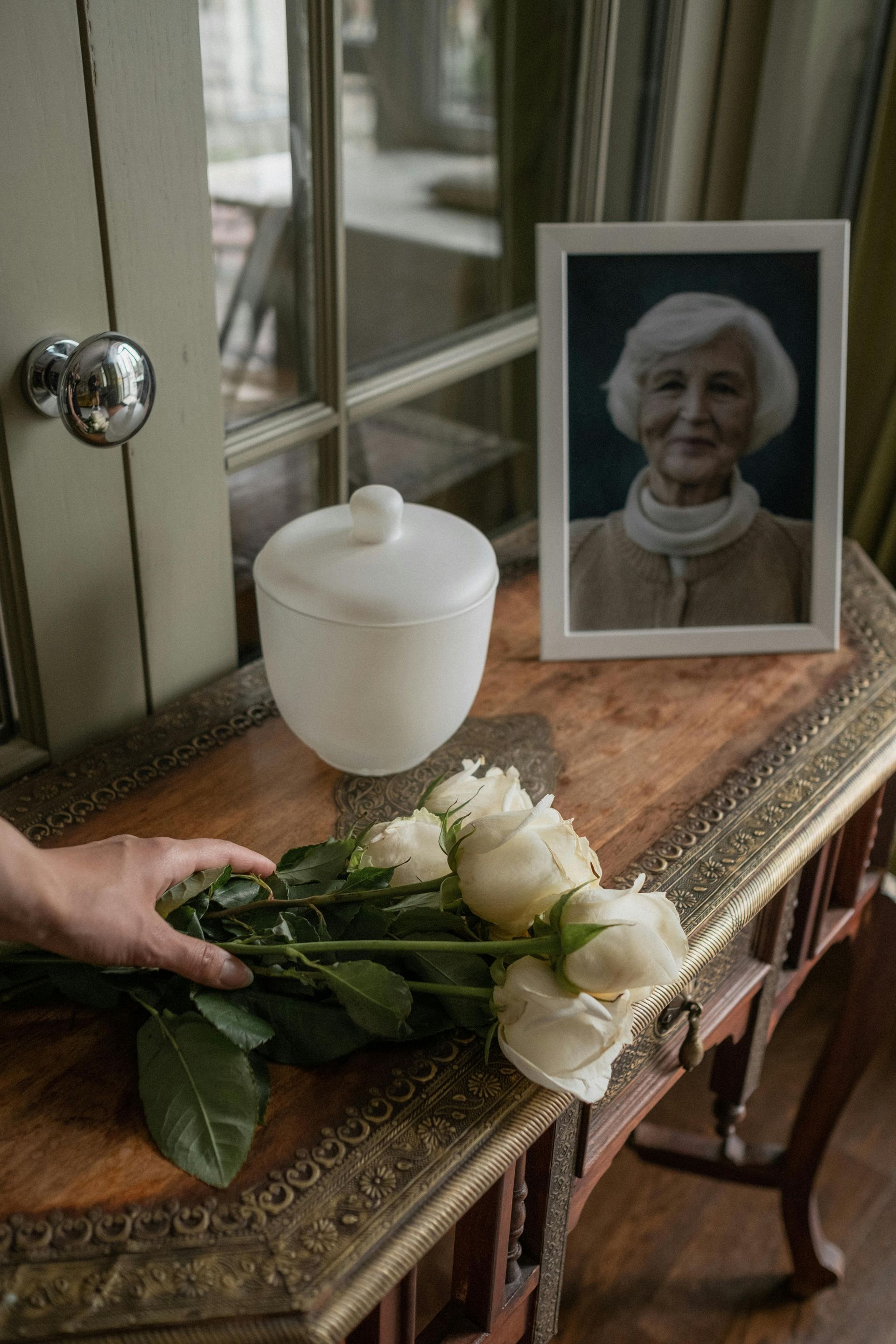
White flowers and a framed portrait on a wooden table, with a candle jar and a hand placing flowers.
May 6, 2026
The number of North Carolina families choosing cremation continues to grow. Here is why, and why more of them are pairing it with a personalized memorial service rather than going direct.
American flag waving on a pole against a cloudy sky
May 6, 2026
A clear guide to the funeral and burial benefits available to veterans and their families in North Carolina. What the VA provides, how to claim it, and what Into Our Kare offers veteran families.

Show More